News
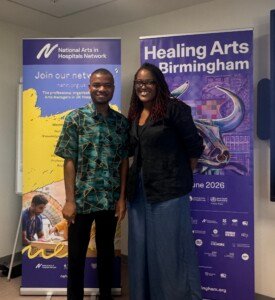
NAHN at Healing Arts Birmingham: Report from the Members’ Meeting (June 2026)
Healing Arts Birmingham was a city-wide initiative demonstrating how arts, culture, and heritage transform health, wellbeing, and social equity. Co-led by Birmingham City Council, the initiative formed part of the Jameel Arts & Health Lab‘s global outreach campaign in collaboration with the World Health Organization. With a coalition of organisations and communities across the Midlands, Healing Arts Birmingham drew together artists, practitioners, researchers and policymakers, wanting to tackle health inequalities and embed creative practice at the heart of public life.
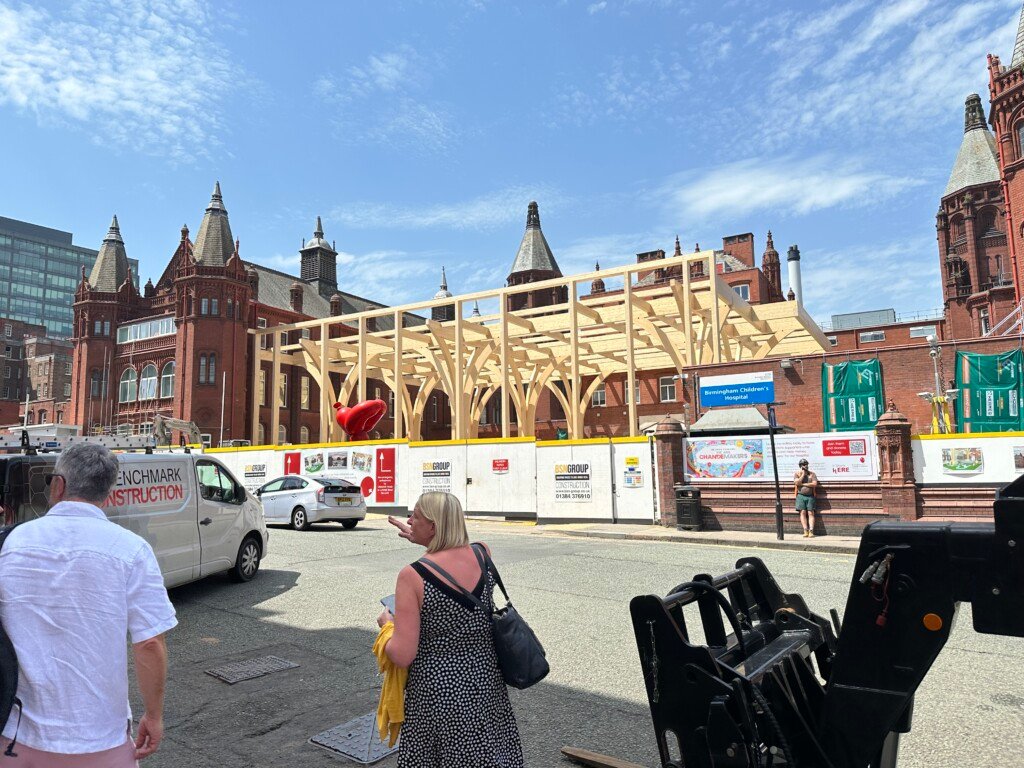
On a sweltering hot day in June, NAHN members came to Birmingham Children’s Hospital for a Members’ Meeting as part of the Healing Arts festival. At first sight, members were greeted by the remarkable sight of nine pale brown ‘glulam’ beams (laminated timber, imported from Nordic countries) being erected to support the structure of the new entrance being built at the hospital. Viewing the construction site, members learned more about the larger-scale Charity projects which are putting the arts front and centre to enhance patient experience.
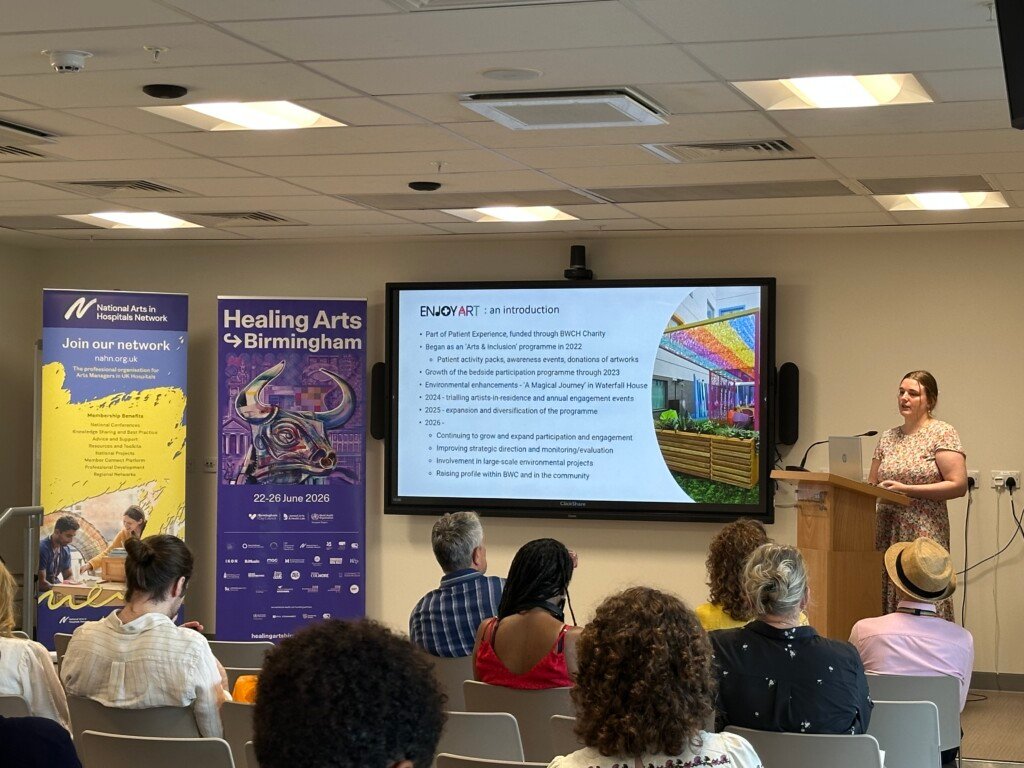
The afternoon’s talks began with a welcome address from Nicole Hermanns, Head of Strategic Planning at the Birmingham Women’s and Children’s Hospitals Charity. This was followed by a presentation from the EnjoyArt team – Arts Manager Elinor Cole and Arts Coordinator Orla Deacon – who presented the picture of arts activity across both the Children’s and Women’s Hospitals, and how different models of delivery are required at each hospital site to spur engagement, build trust, and raise visibility with patients and staff. The EnjoyArt team spoke about their annual events and projects, as well as their role in placing the patient voice at the centre of new environmental enhancements.
Within the auditorium, a lively showcase introduced attendees to the hospital’s visiting arts providers, managed by the EnjoyArt programme. From ‘Singing Medicine’ to ‘Purple Hill Print’s, the ‘Giggle Doctors’ to ‘Let’s Animate’, the breadth of creativity brought to patients at the bedside and the enthusiasm which drives participatory arts programmes in hospitals was on show.
Nicole then returned to speak more about the Charity’s large-scale appeals and capital projects, including the transformation of the hospital’s front of house. This entrance is being built with a natural habitats theme and will feature the largest live-reef aquarium in a hospital in the world (with over 300 fish), which is co-designed by patient ambassadors. Nicole also spoke about recently completed projects, including the first phase of the new Emergency Department, as well as upcoming appeals such as the Burns Centre transformation. Across all these projects, the importance of art is at the fore. The new entrance will have a community stage, to be managed by EnjoyArt, for performances and events, and visual art is being woven in from the beginning of all new constructions.
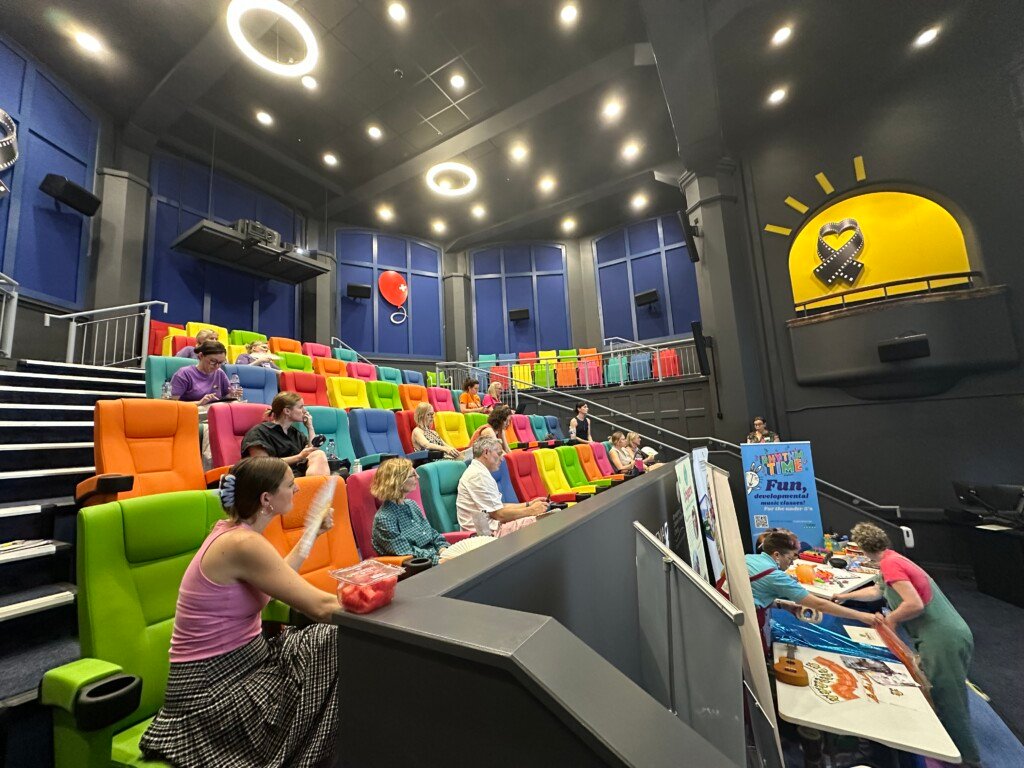
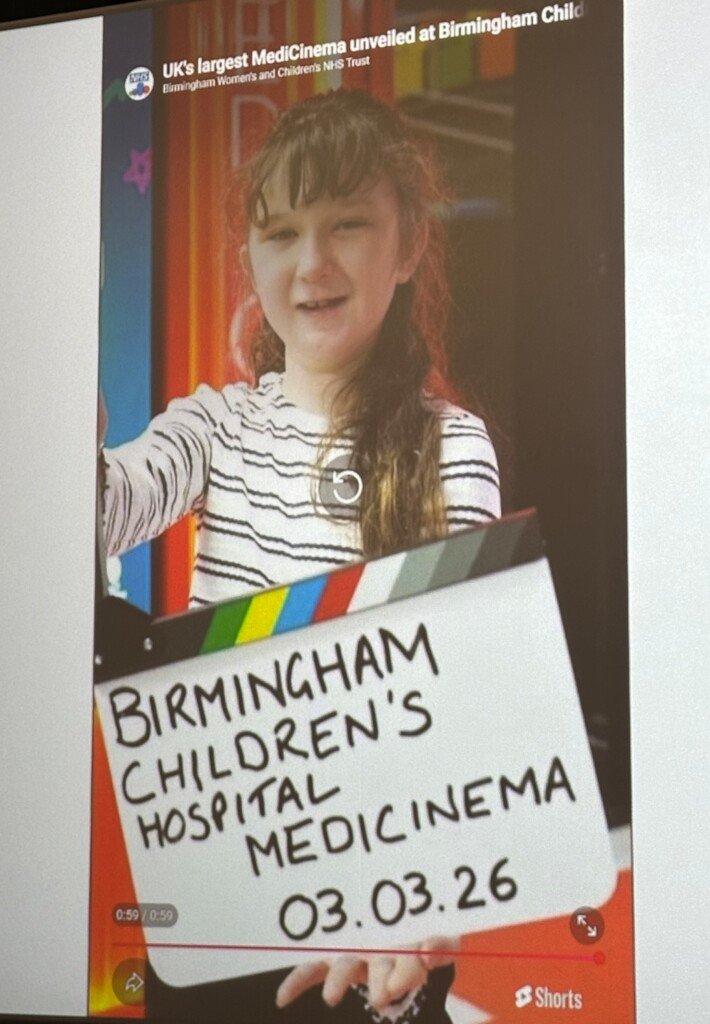
Attendees were welcomed into the new MediCinema at Birmingham Children’s Hospital. This remarkable new space, which opened March 2026, has come a long way from its previous life as an operating theatre in the Victorian hospital. The room is still used as a lecture theatre throughout the week, but thanks to a Charity-funded transformation, patients and families can now experience the magic of cinema during evenings and weekends.
Niamh White, CEO and Co-Founder of Hospital Rooms, followed with a thought-provoking, powerful presentation about their work in mental health spaces. Hospital Rooms are just wrapping up their project at Parkview Clinic, the CAHMS unit which is part of Birmingham Women’s and Children’s until the 1st of July, when it transfers to a new Trust. Niamh spoke about their Digital Arts School, an online engagement programme which also provides resource packs to mental health units across the country, as well as the methodology behind their new National Framework for arts in mental health spaces. Niamh described their experience of the mental health estates as “crumbling”, a place were “liberties are restricted and boredom is rife”. Hospital Rooms have since worked in 6% of these estates in the UK, so there is plenty of work left to do. Hospital Rooms are working on a national framework to advise mental health trusts on best approaches for incorporating art and creativity.
To wrap up the afternoon, Laura and Guy presented updates from NAHN, as well as creative health work happening nationally including the Healing Arts activations in both Scotland and Birmingham. NAHN news included a summary of recent conferences and events, which have highlighted growing support for arts in healthcare and increased engagement with creative health policy and hospital design initiatives. Plans are underway for NAHN’s Sheffield conference in October 2026, while venues are still being sought for the February and June 2027 meetings. Lime Arts will host the October 2027 event. Finally, NAHN is preparing an Arts Council funding bid to expand member support, develop national guidance and benchmarking, strengthen advocacy and partnerships, and review future governance options as NAHN grows.
Members left the NAHN session at Healing Arts Birmingham informed, inspired and heated, with impetus to build resilience and make further connections from our growing, strong community.
~
Regional NAHN representatives have shared updates, summarised here to keep everyone up to date. A key theme throughout the regions has been the need for greater recognition, strategic support and sustainable funding to ensure the long-term future of hospital arts programmes. The Midland Arts Network has continued to develop innovative creative health programmes, including Derby & Burton’s ‘Music in Unusual Spaces’, bringing live music to overlooked hospital areas such as kitchens, porters’ corridors and mortuary spaces. Members have shared best practice on artwork acquisition, collections and decommissioning. Projects include Midland Metropolitan University Hospital restoring its historic stained-glass chapel windows in the new gallery, poetry initiatives, new exhibitions, a heritage film, and Nottingham’s co-produced ‘Sickle Cell’ arts project.
In the South West region, Shanti Sherson has been appointed Arts Manager at Bristol Children’s Hospital, while Artcare has undergone an external evaluation by Rebecca Gordon-Nesbitt. Artcare vacant posts are currently on hold. Members have also presented and contributed to national conferences on creative health, healthcare design and mental health, including Future HealthSpaces and Design in Mental Health. North of the border, Healing Arts Scotland brought together regional and national events across Scotland to showcase how arts and culture can support positive health outcomes through networking, collaboration and shared learning. The programme culminated in contributions to the Chief Medical Officer’s Realistic Medicine Conference, where Dr Jill Sonke highlighted the evidence that the arts can improve, maintain and restore health. Building on the success of the events, work is now underway to develop a policy and funding framework that recognises arts and culture as vital assets for improving health and wellbeing. The South East has been inspired and activated by the Cambridge University Hospitals Arts Festival, with many pop-up opportunities for artmaking, discussion and the celebration of what art can do in hospitals.
~~~~~~~~~~
The 2025 National Arts in Hospitals Network conference in York:
“Reciprocal Funambulists – Balancing Creativity and Care”
Reflections on the conference by Lorna Collins, NAHN Coordinator:
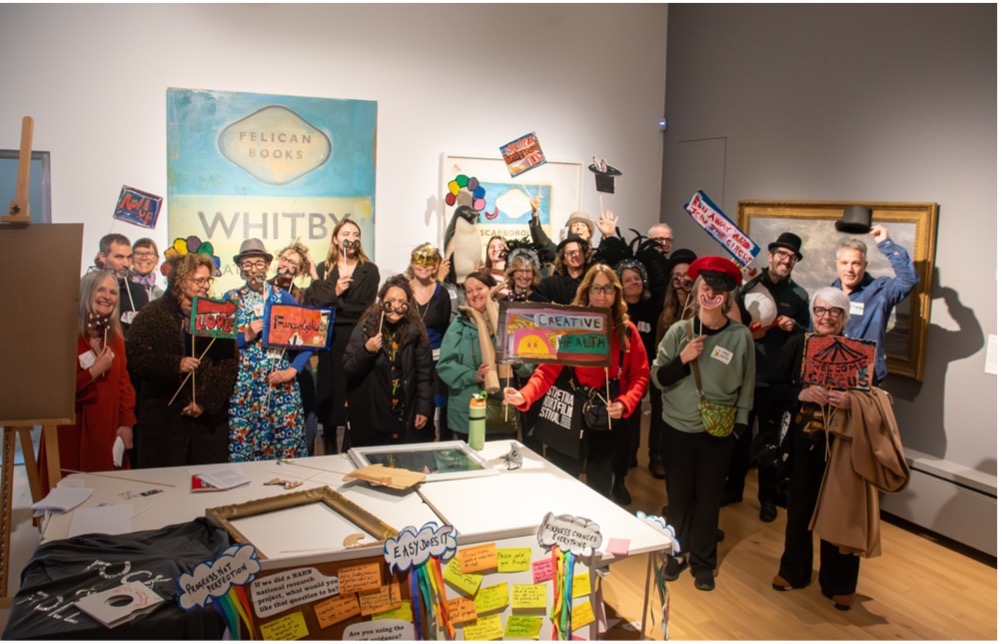
Roll up, roll up to the circus of creativity! At this year’s National Art in Hospitals Network Conference, held at the York Art Gallery, we saw clinicians and artists working together on a tightrope to deliver healthcare enhanced and navigated by engaging with creativity, imagination and solidarity. The event was hosted by the York and Scarborough Teaching Hospitals NHS Foundation Trust’s Arts Team in partnership with York Museums Trust and supported by Arts Council England.
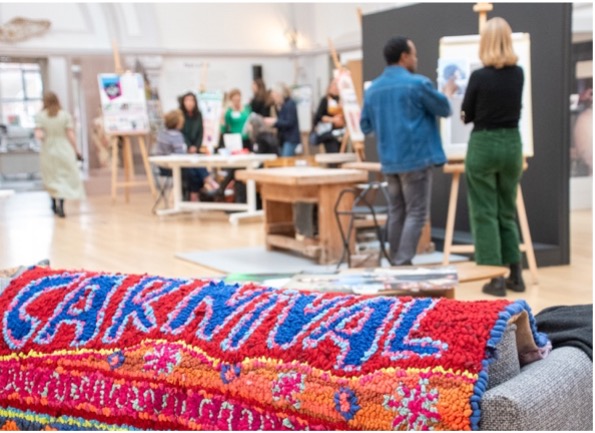
The York Gallery was filled with stalls of colourful curios, like magical cabinets at a circus, called “The Greatest Show of Care, Wonderful Worlds”. These stalls presented hospital arts programmes celebrating the dazzling, delicate and daring acts behind arts in hospitals and healthcare. Including dancers, jokers, visual and musical artists, these artists and arts in health practitioners raised the tone of the conference to be light and fun, on a tightrope, because their practices are so real, serious and meaningful for the patients they support.
In this way, the conference opened the opportunity for participants to walk along the fine line between art and care. We explored thehospital not only as a site of treatment, but as a powerful space for balancing care, compassion and connection. The main theme for the conference was to hold up the hospital as a space for reciprocity – using art and creativity to facilitate giving and taking the best form of healthcare.
As a prelude to the conference, we assembled at York Hospital for a tour of the art across the hospital site. With extraordinary, colourful and intuitive artworks lining the walls of the corridors, and a number of carefully designed, nourishing gardens, we saw how art and nature enhance hospital life – for patients and all staff members who work here.
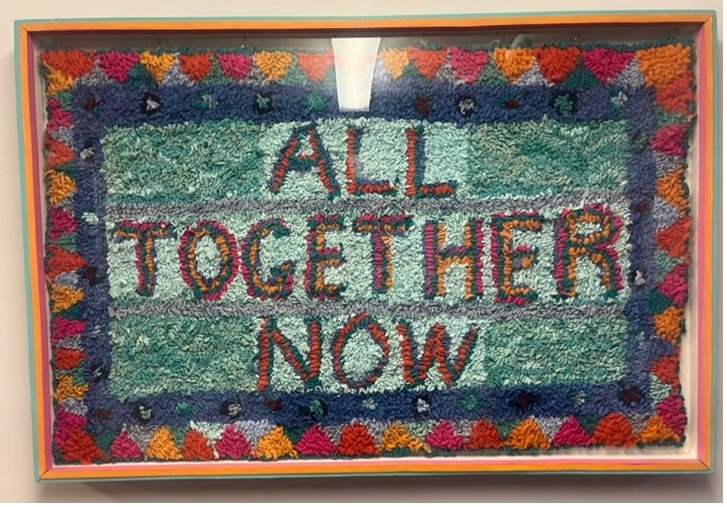
One highlight of the tour was Lu Mason’s bright rag rug All Together Now, celebrating 75 years of the NHS, made from old staff uniforms. This piece was created during the COVID pandemic; it represents the whole hospital community coming together in the extreme…we are all together now.
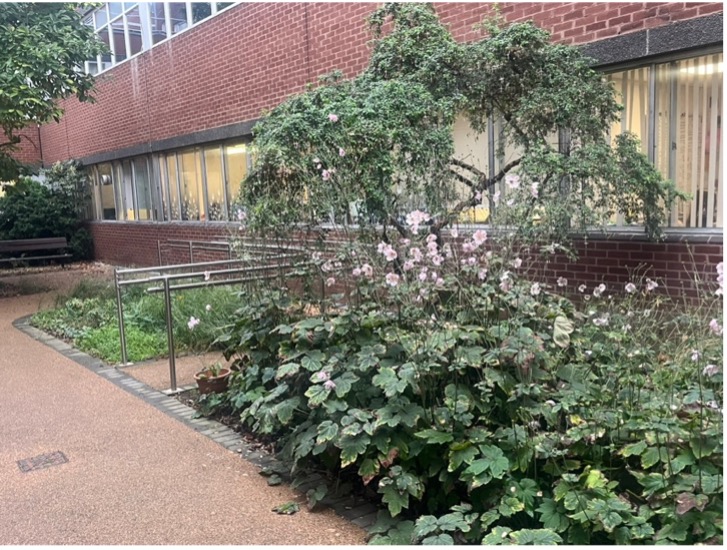
Another highlight was seeing the beautiful, calming Peace Garden, which has rails and space for patients’ beds to be pushed around it. This garden was created with staff to encourage engagement with the outdoor space, connection with others and reflection during COVID times. It was fortifying to see how such powerful and nourishing works of art and community practices were built during the pandemic, which continue to enhance hospital life now.
After seeing such lush, revitalising visual delights around the hospital, we went to York Gallery for the start of the conference. Griselda Goldsbrough, Art and Design Development Manager at York and Scarborough Teaching Hospital NHS Foundation Trust, kicked things off. Dressed on theme as a circus master, beneath her bold top hat, she said, “Like funambulists on a tightrope, we work with tension, risk, precision and joy navigating the challenges of healthcare with a creativity, imagination and solidarity.”
Participants wore stickers which divided us into groups – we were either clowns or acrobats, sent to a particular activity. The day proceeded with the opportunity to see artists and musicians perform, who came from across the York and Scarborough regions, and hear keynote talks. The gallery became a buzzing nexus for bold, fun, live opportunities to be creative.
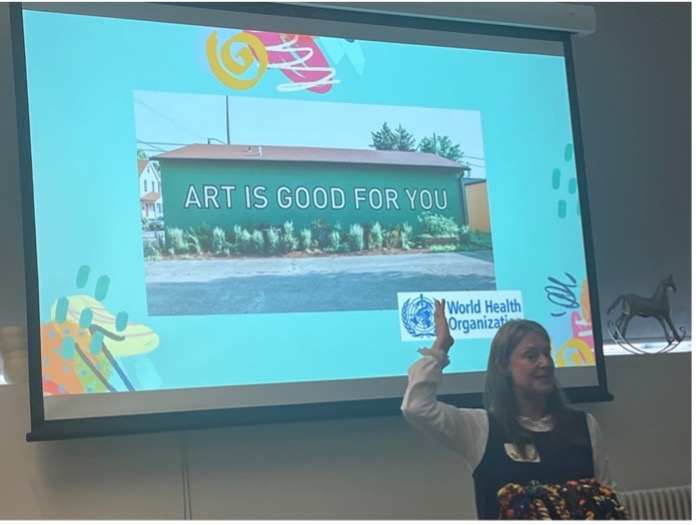
Nicola Gill’s keynote, “The Art of Medicine”, was interesting and inspiring, as she discussed both the clinical and human dimensions of using art as a catalyst for learning about uncertainty and being human. Nicola has used art and creativity as resources in her work as a GP and medical educator for 25 years. Nicola said, “Art bathes us in positivity, improving wellbeing and health outcomes.” Nicola described how art is a powerful tool for doctors to reflect on what it is like to be a patient, and how important art is in medical education, by facilitating learning and using art as a catalyst for change.
Francois Matarasso’s powerful keynote, “Co-creation and recovery”, discussed how cultural participation and the creation of art “are a human right, not a privilege”. François Matarasso has worked in co-creation for 45 years, as a community artist, producer, researcher, consultant, trainer and trustee. He said, in the context of art and healthcare: “There is only us. There is no them. We sink or swim together. […] We are all recovering. We just need each other’s help to do it.”
These invigorating words set us up to go boldly around “The Greatest Show of Care, Wonderful Worlds” of hospital arts programmes, pitted around the gallery. There was so much stimulus, celebrating the dazzling, delicate and daring acts behind arts in hospitals and healthcare.
I summarise a few of the standout moments in my journey through the circus.
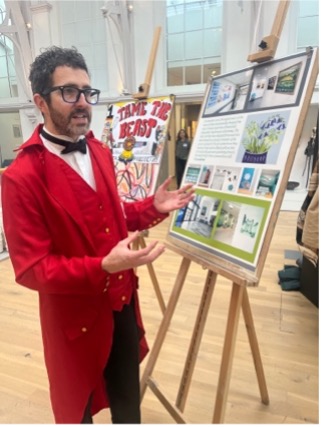
I met Dan Savage, Healthcare Designer, who was wearing a long red coat. His act was called “Tame the beast”. Behind his dashing circus veneer, Dan had serious things to say about how to make arts programmes work well in hospitals. He said, “You need to make sure that the art is integrated in hospitals at the planning stage. Making space cohesive on the hospital ward helps the healthcare journey for patient be more coherent. In trying to structure a project, the artist needs to work closely with contractors. You also need to navigate infection control, health and safety, cladding, and more.”
Ruth Allen presented her work as an occupational therapist using art at Foss Park, a local mental health hospital. She described how she uses art on the four wards in this hospital and the manifold benefits that the art groups have for the patients: it gives them confidence, they can relax, it provides respite from trauma, it opens pathways out of hospital. She also described the ‘Sketchbook circle’ at the York art gallery (run by the conference maître Griselda Goldsbrough), providing an inclusive, welcoming space for people in the community.
On the first floor, I saw Nduka Omeife drawing a beautiful portrait, quietly and with compassion exuding from his fingers and his composure. I stopped and breathed in – here was a calm microcosm amidst the circus exuberance all around us. Nduka draws portraits of NHS staff members – I saw some of his exquisite pieces lining walls of the hospital on the tour, earlier this morning.
In a little nook, I then found another piece of tranquillity with the shrine of sound therapy presented by Gemma Hargreaves. Gemma sat on stool, surrounded by her collection of singing bowls, gongs, chimes, strings and tuning forks. She gave an introduction about how her holistic practice of using harmonious, melodic sounds supports patients and staff in multiple healthcare settings. Then she began to play. Her chimes and bowls sounded such deeply relaxing and revitalising, resonant frequencies. I felt utterly taken away.
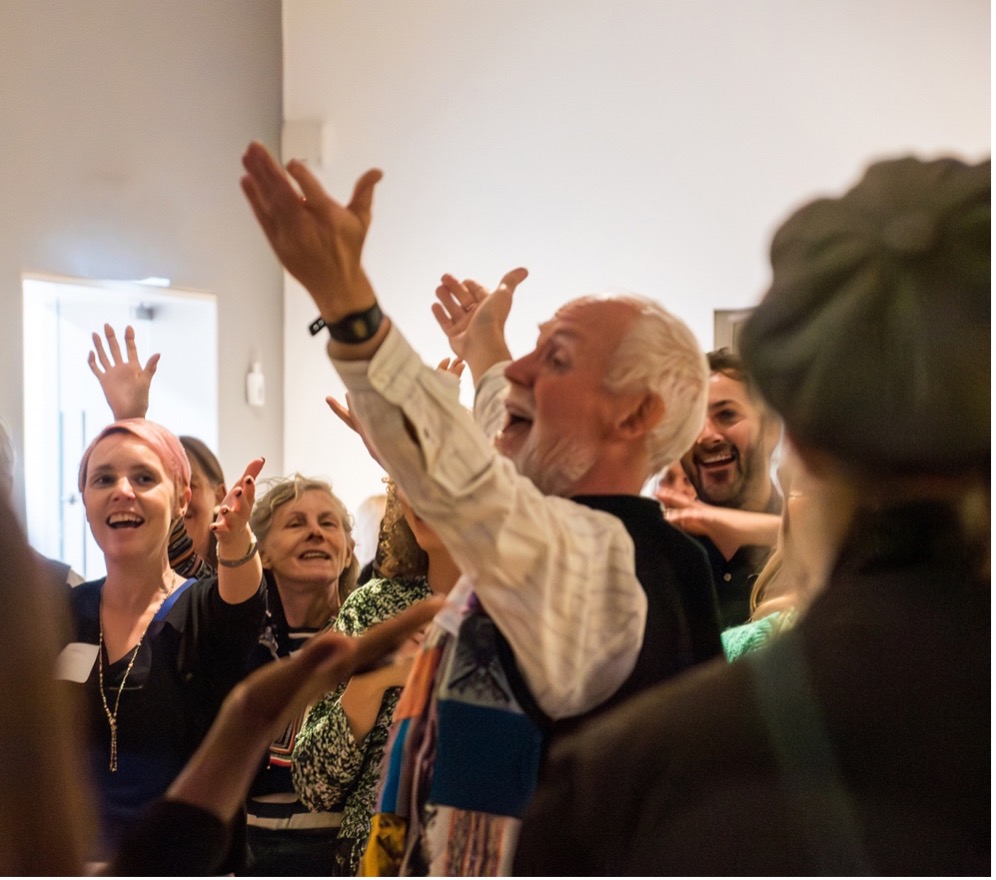
Music was perhaps the standout moment of the conference, with Gemma’s extraordinary sounds, and also from Chris Bartram, the York Community Musician. He had a mere 15-minute slot to bring all conference participants together to perform as a choir. I don’t know how he did it. Now I can’t actually sing (at all), but
I felt roused to sing as loudly as possible – we all did. Somehow, as we sang a stirring tune, we were united. It was great fun and so empowering. As artist Lu Mason presented in her piece that we saw in the hospital gallery at the beginning:
All together now.
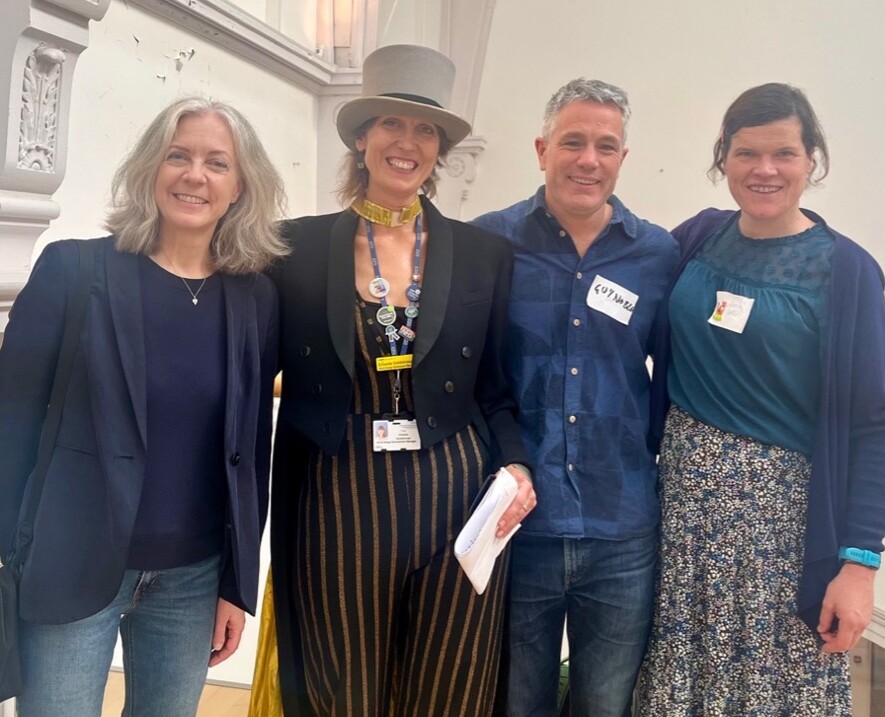
NAHN team at the conference: Laura Waters (NAHN director), Griselda Goldsbrough (Art and Design Development Manager, York Teaching Hospital NHS Foundation Trust), Guy Noble (NAHN director), Lorna Collins (NAHN co-ordinator)
(photographs by Elly Ross and Lorna Collins)